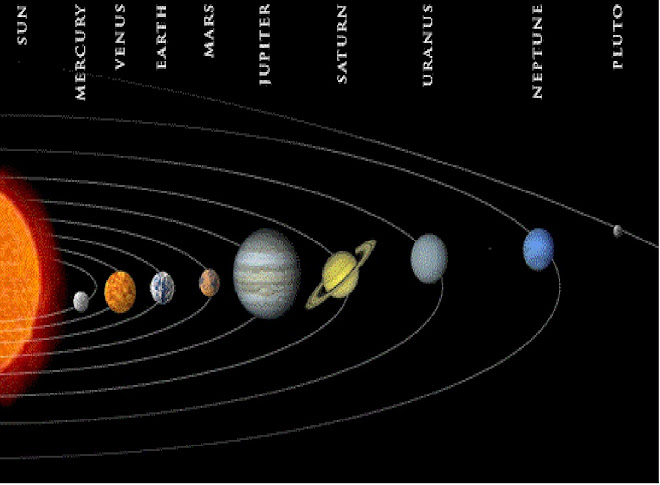
Wednesday, January 21, 2009

Tuesday, January 20, 2009
Jupiter
Jupiter has been explored by robotic spacecraft, during the early pioneer flyby missions.
Viewed from earth, jupiter reaches an apparent magnitude of-2.8. It is the third brightest object in the night sky.
It's mass is two and a half times all the other planets combined.
The latest probe to visit Jupiter was the Pluto-bound new horizons spacecrafts in february 2007.
Viewed from earth, jupiter reaches an apparent magnitude of-2.8. It is the third brightest object in the night sky.
It's mass is two and a half times all the other planets combined.
The latest probe to visit Jupiter was the Pluto-bound new horizons spacecrafts in february 2007.
Mercury
Mercury orbits the sun every 88 days. It also is the smallest planet in the solar system.Mercury has craters and an iron core. The core generates a magnetic feild 1% as strong as the earth.
It's a dense planet due to it's large core.
It's a dense planet due to it's large core.
Earth
Earth is the third planet from the Sun in the solar system. It is one of the four terrestrial planets in the solar system meaning it has a mostly solid surface. Earth is often called The Earth, Planet Earth, the World Terra, and home. About 71% of Earth's surface is covered in salt water oceans. Earth is the only place in the universe where liquid water is known to exist.
Venus
it is known as earth's sister planet because they are similiar in size, gravity, and bulk composition.
It reaches it's maximum brightness shortly before and after sunrise and sunset. Venus is the second closest planet to the sun.
venus's surface has been mapped only in the last 22 years. Venus is sometimes called the morning star and evening star.
It reaches it's maximum brightness shortly before and after sunrise and sunset. Venus is the second closest planet to the sun.
venus's surface has been mapped only in the last 22 years. Venus is sometimes called the morning star and evening star.
Neptune
Neptune is the eighth planet from the Sun in the solar system. Neptune is named for the Roman god of the sea. Neptune is the fourth-largest planet by diameter and the third-largest by mass. Neptune was the only planet found by mathematical prediction rather than by empirical observation. Neptune is 17 times the mass of earth and is slightly more massive than its near-twin Uranus.
Uranus
Uranus is the seventh planet from the Sun in the solar system. It is also the third largest planet in the solar system. It is named after the ancient Greek deity of the sky. It was never recognized as a planet by ancient observers because of its dimness and slow orbit. Uranus is similar in composition to Neptune and both have different compositions from those of the larger gas giants Jupiter and Saturn.
Saturn
Saturn has a prominent system of rings, consisting mostly of ice particles with a smaller amount of rocky debris and dust. Saturn is named after the Roman god Saturnus (that became the namesake of Saturday.) The planet Saturn is composed of hydrogen with small proportions of helium and trace elements. Saturn is the sixth planet from the Sun. Saturn is the second largest planet in the solar system.
Mars
Mars is the 4th from the Sun in the Solar System. The planet is named after Mars the Roman god of war. Mars is a terrestrial planet with a thin atmosphere having surface features reminiscent both or impact craters of the Moon. Mars has two Moons Phobos and Deimos. In addition to its geographical features, Mars’ rotational and seasonal cycles are likewise similar to those of Earth.
Thursday, January 15, 2009
sun
The sun accounts for 99.8% the solar system's mass.The sun's suface has hydrogen, nickel, sulfur. The sun orbits the center of the milky way galaxy. The sun is not solid like the earth.
the sun's energy is produced by nuclear fusion reactions.
the sun's energy is produced by nuclear fusion reactions.
Subscribe to:
Posts (Atom)